
Red Hat
Product Management, Operations Analysis, UX.
Project Overview
- Role & Duration: Product Management and Digital Accessibility Intern, 3 months.
- Team: Digital Product Management.
- Goal: Develop Red Hat's accessibility program.
- Tools: Google Workspace (Gemini, NotebookLM, etc.), Figma, WAVE.
Summary
Red Hat was developing an accessibility program that needed to be standardized accross a large company of 20,000+ employees. I was tasked with identifying operational gaps with accessibility in employee workflows across the product development lifecycle. This included user interviews, data analysis, competitive analyses and quantitative methods. Additionally, I supported other accessibility initiatives including designing for AI-powered alt-text generators.
Goal
How might we identify gaps in accessibility workflows and create actionable, enterprise-wide solutions?Project Overview
I led a cross-functional research initiative (35+ interviews) and delivered a comprehensive executive report outlining:
- Key workflow breakdowns
- Root cause analyses (handoffs, unclear expectations, tooling gaps)
- Practical, team-level solutions
- Process recommendations for managers and product leads
Presented findings to 80+ stakeholders, including Product leadership and VPs.
Context
Accessibility was recognized as important across teams, but execution varied:
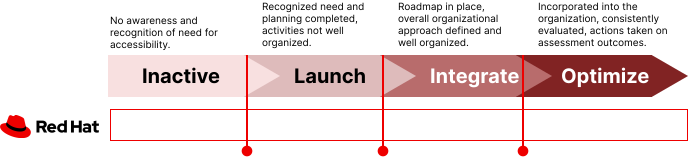
- Identified Red Hat's current accessibility maturity level (by the W3C).
- Unclear ownership between Design, Engineering, QA, etc.
- Accessibility introduced later in product cycles
- Inconsistent documentation and expectations
- Limited visibility into cross-team workflow friction
- Leadership needed a clearer understanding of systemic issues and actionable next steps.
My Role
As a Product Management and Digital Accessibility Intern, I independently owned:
- Research planning and interview design
- Cross-functional stakeholder interviews
- Accessibility reviews across three major products in partnership with lead PMs
- Synthesis of findings
- Development and delivery of executive presentation
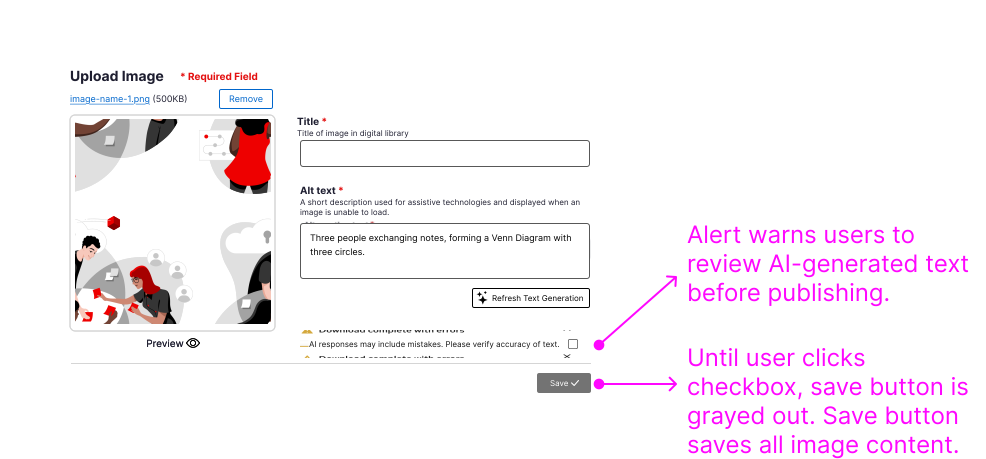
- Design of AI-powered accessibility features.
Following my report, my work was used to inform future process improvements.
What I did
My work spanned beyond Product Management.
- Cross-Functional Research (35+ Interviews) with: product management, engineering, UX, design, content, SEO, accessibility, and more across multiple teams.
- I identified core issues:
- Unclear Responsibilities: Teams were unsure who was accountable for accessibility decisions at different lifecycle stages.
- Late Integration: Accessibility often addressed during QA rather than during design or planning.
- Manager Expectation Gaps: Accessibility expectations were not consistently reinforced across teams.
- Single Source of Truth: Guidelines existed but were not embedded into sprint or developer workflows.
- Accessibility Reviews: I conducted accessibility reviews across three major product domains to: Identify compliance risks, surface usability gaps, and highlight patterns across teams. I then presented findings directly to product managers and their teams including engineer and designers, grounding strategic recommendations in concrete examples.
- I presented my findings in an executive report covering: Key workflow breakdowns, root causes, role-specific solutions, manager-level process recommendations and suggested tooling. I shared my work with 80+ stakeholders including product leadership and VP-level executives.
- UX Contributions: I completed small design/UX projects to improve accessibility in specific workflows, including attending design reviews with UX teams to gether feedback.
Impact
Although I concluded my internship before long-term metrics were available, the project resulted in:
- Enterprise-wide visibility into workflow breakdowns.
- Clear articulation of systemic accessibility challenges.
- Actionable recommendations for managers and product teams.
- Executive discussion around ownership and process alignment.