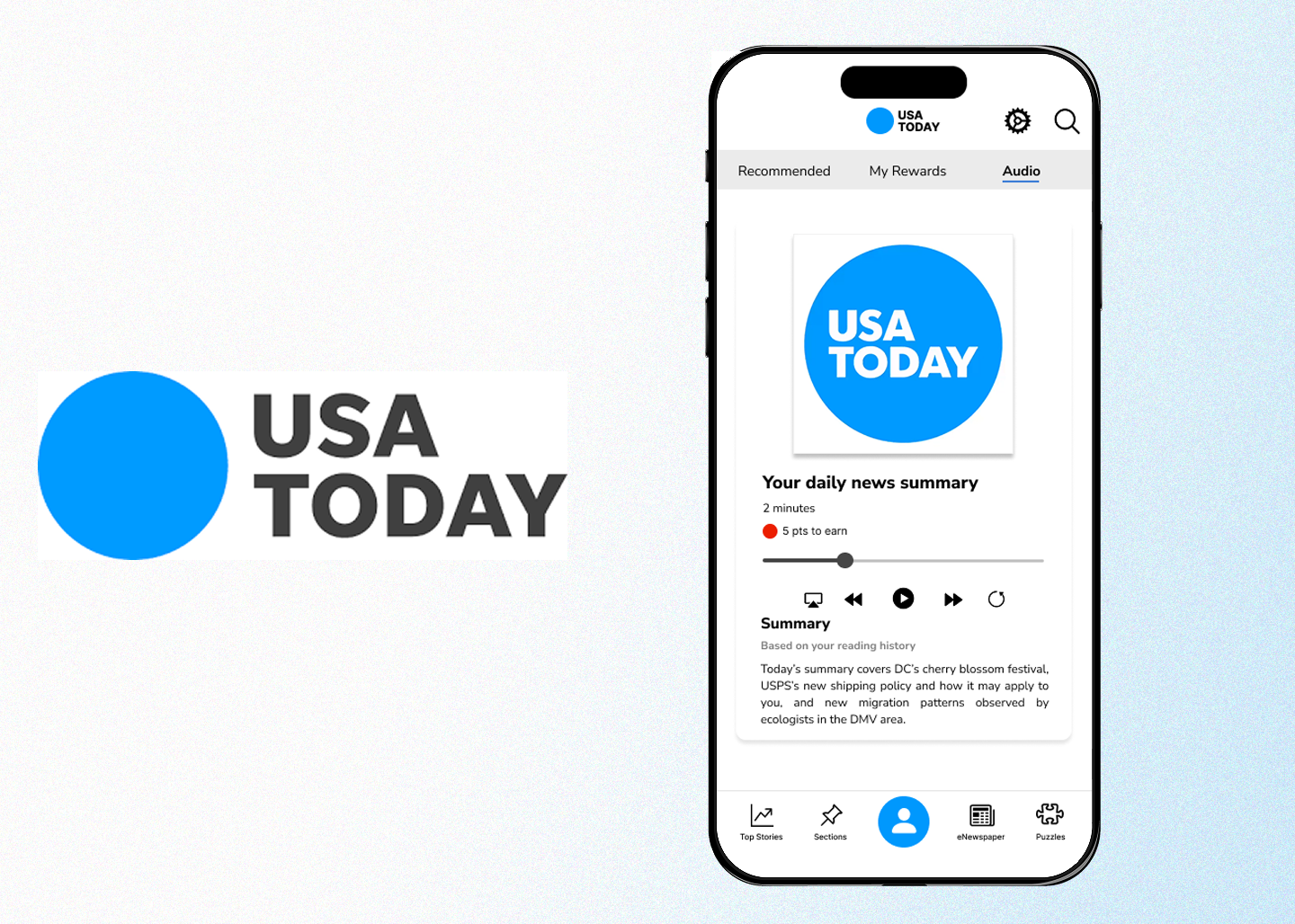
USA Today
Developing a product strategy and design for rewards and AI features.
Project Overview
- Role & Duration: Lead UX/UI Designer & Product Strategist, 3 months
- Team: Sponsored course project for USA Today's Customer Experience Team
- Goal: Increase user retention with a gamification program to encouraging sign-ins and engagement for working professionals.
- Tools: Figma, Adobe, Qualtrics, 11Labs.
Summary
According to USA Today, only 2% of users signed in when accessing the app. USA Today aims to target young adults and mid-career professionals to begin encouraging sign-ups and consistent engagement. To address this issue, I conducted exploratory work, competitive analyses, a large-scale user survey, and iterative user testing on prototypes.
I prototyped several features, including AI summaries, personalization, and rewards. Over 84% of users reported that rewards were their favorite feature, and 64% reported that they found rewards somewhat to highly motivating to sign up for USA Today.
Goal
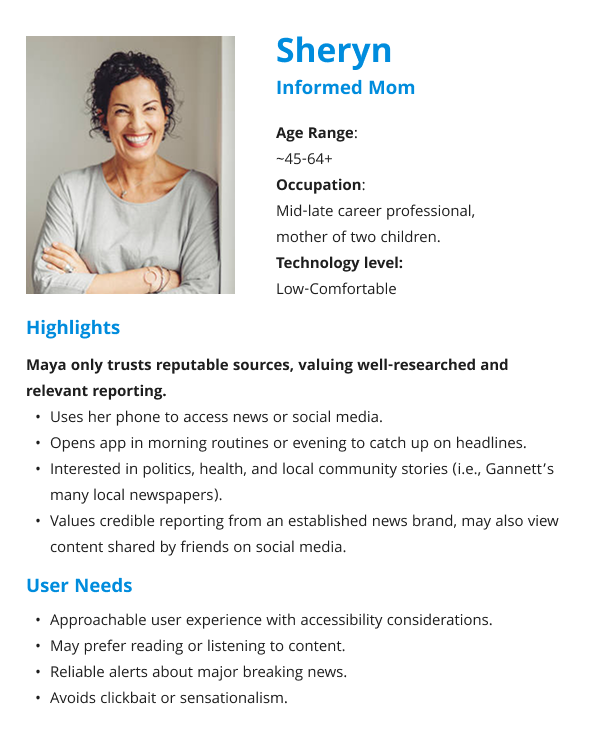
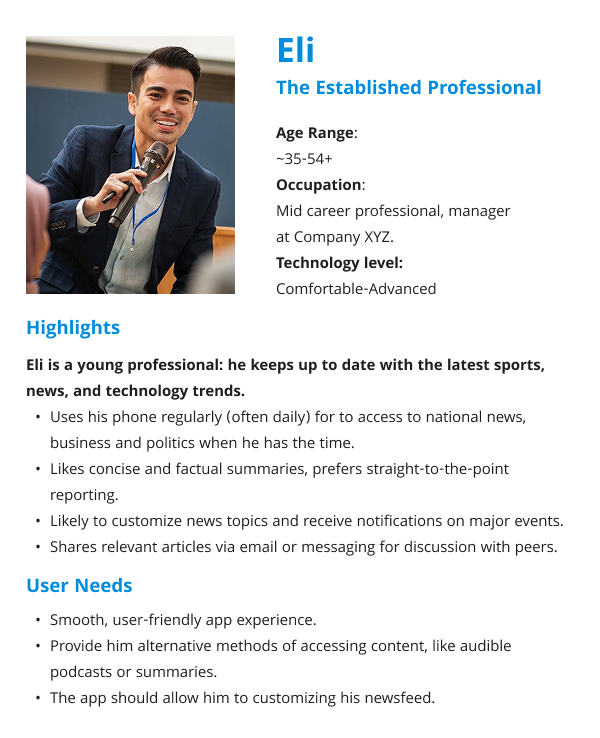
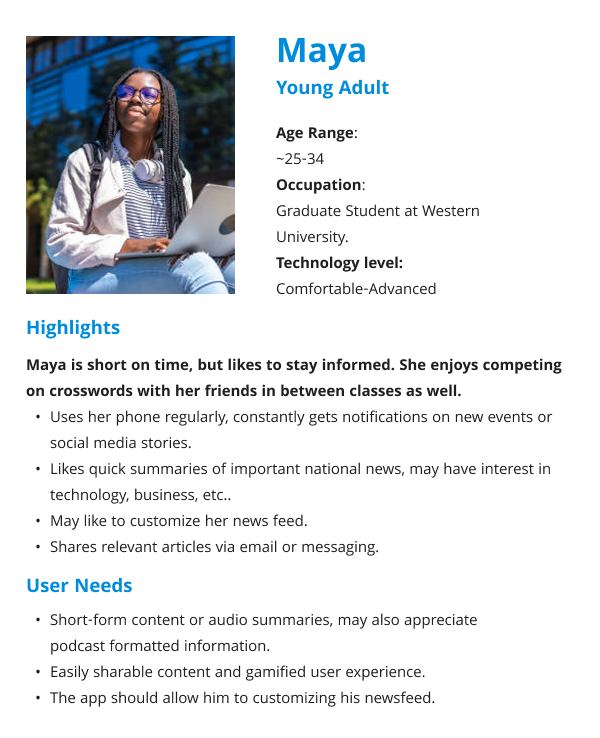
Research Question: How might we encourage working professionals to authenticate on each visit to the app?Personas
I evaluated USA Today's current customer base, with particular focus on expanding to customer segments like young adults and mid-career professionals.
Survey
After identifying the user segments, I developed a survey to gather data and perspectives from a large number of diverse users. I chose to conduct a survey to better understand general sentiments and user needs. Additionally, surveys allowed me to evaluate and quantify the data received quickly.
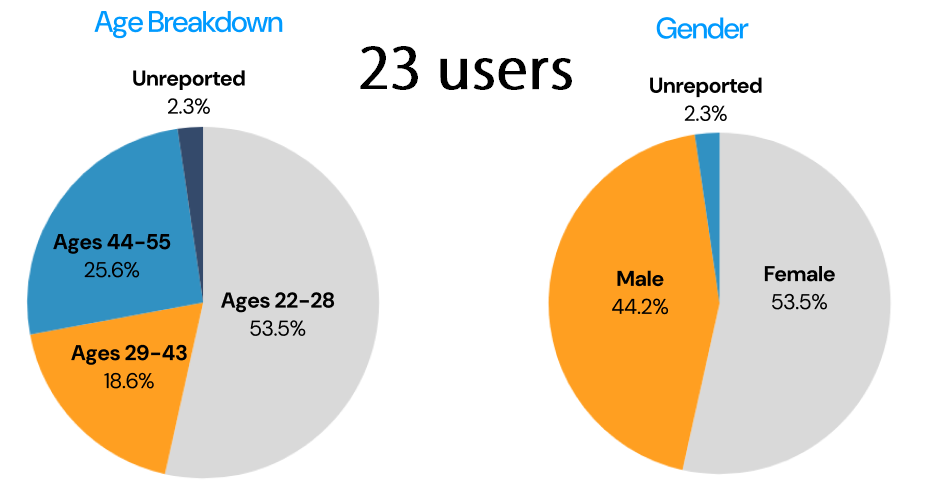
- Surveyed & interviewed 43 working professionals.
- Age: 22–28 (53.5%), 29–43 (18.6%), 44–55 (25.6%)
- Medium: 53% of users access news primarily from their phones.
- Key barriers to sign-up: spam (48%), legitimacy (27%), privacy (23%)
- Motivators: Gift cards (44%), $5 local coupons (23%), branded merchandise (20%)
Design & Iteration
Lead designer on all wireframes: Integrated survey results and user feedback into prototypes. Early iterations were website wireframes, later adapted to mobile app.
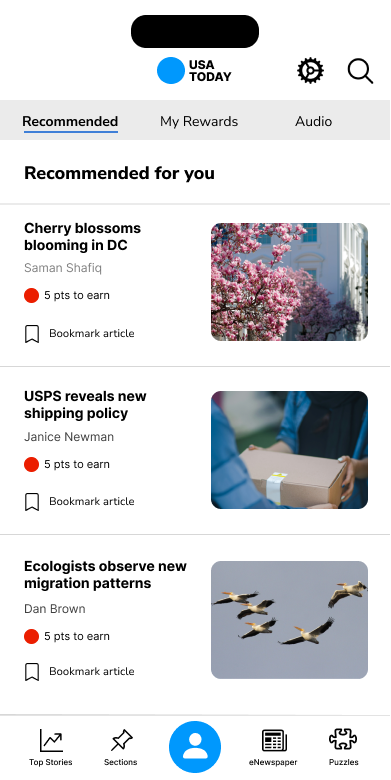
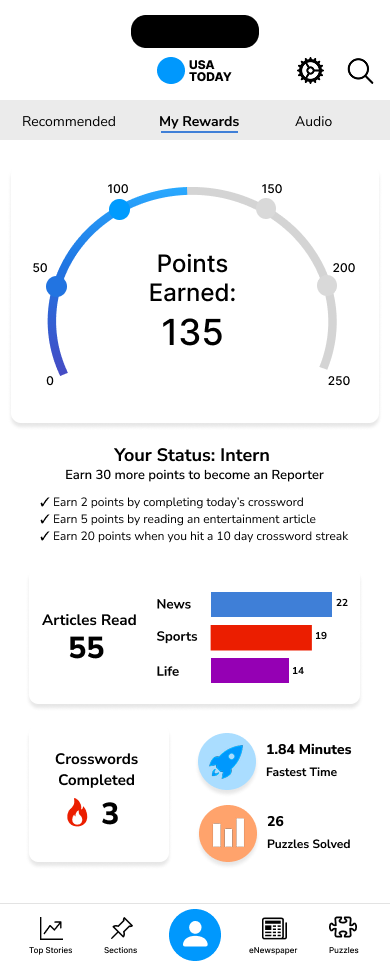
- Gamification: Points earned for reading, podcasts, crosswords.
- Personalization: Tailored news feed based on interests.
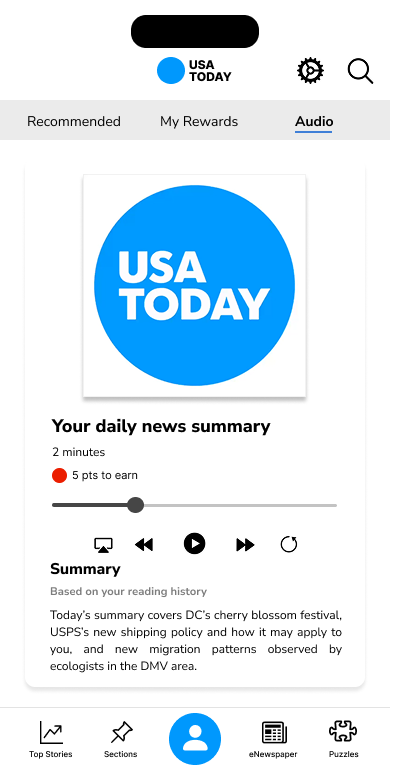
- Audio engagement: AI summaries & podcasts for accessibility.

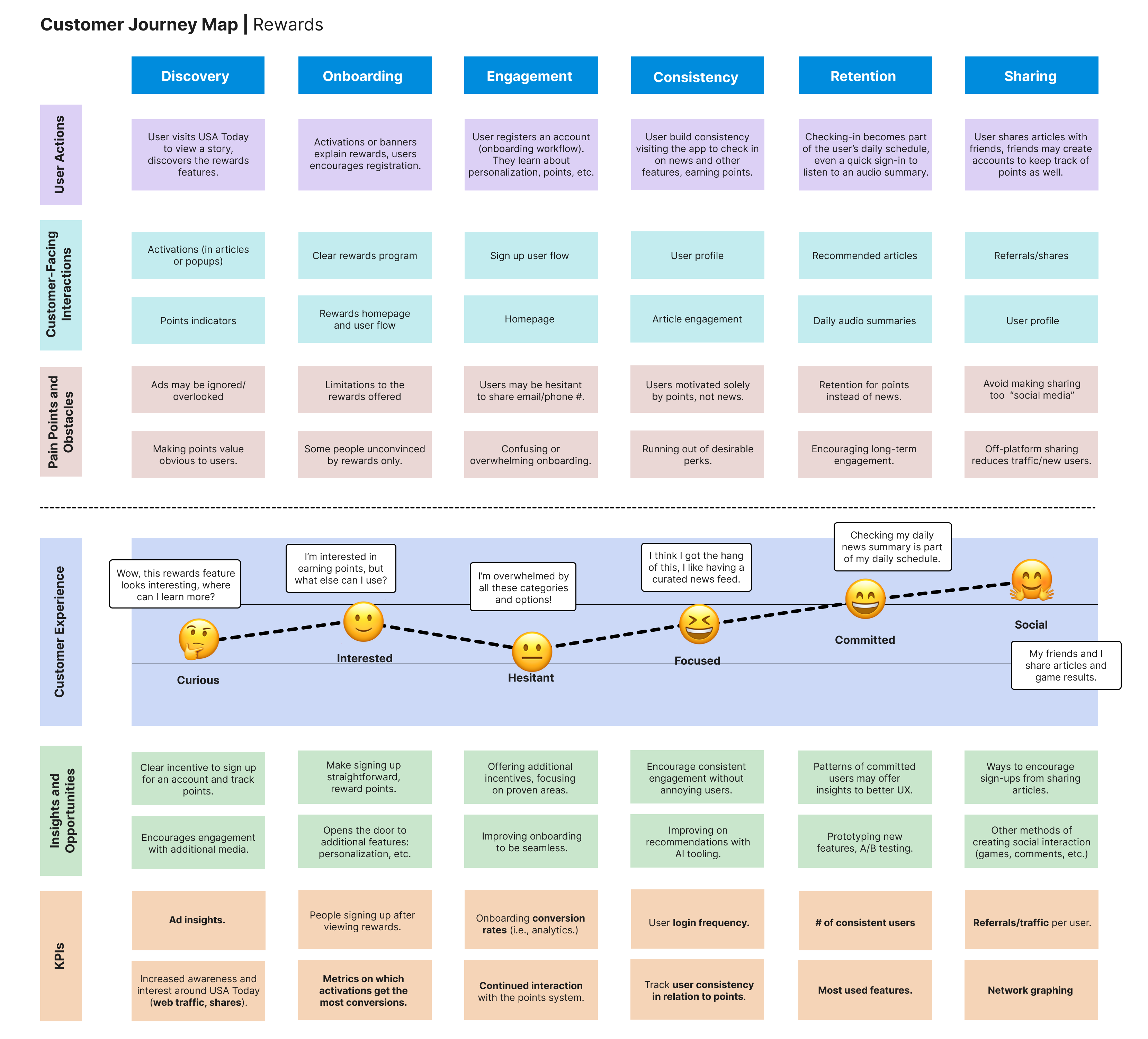
Customer Journey
Digital Rewards System
I led the digital rewards initiative.
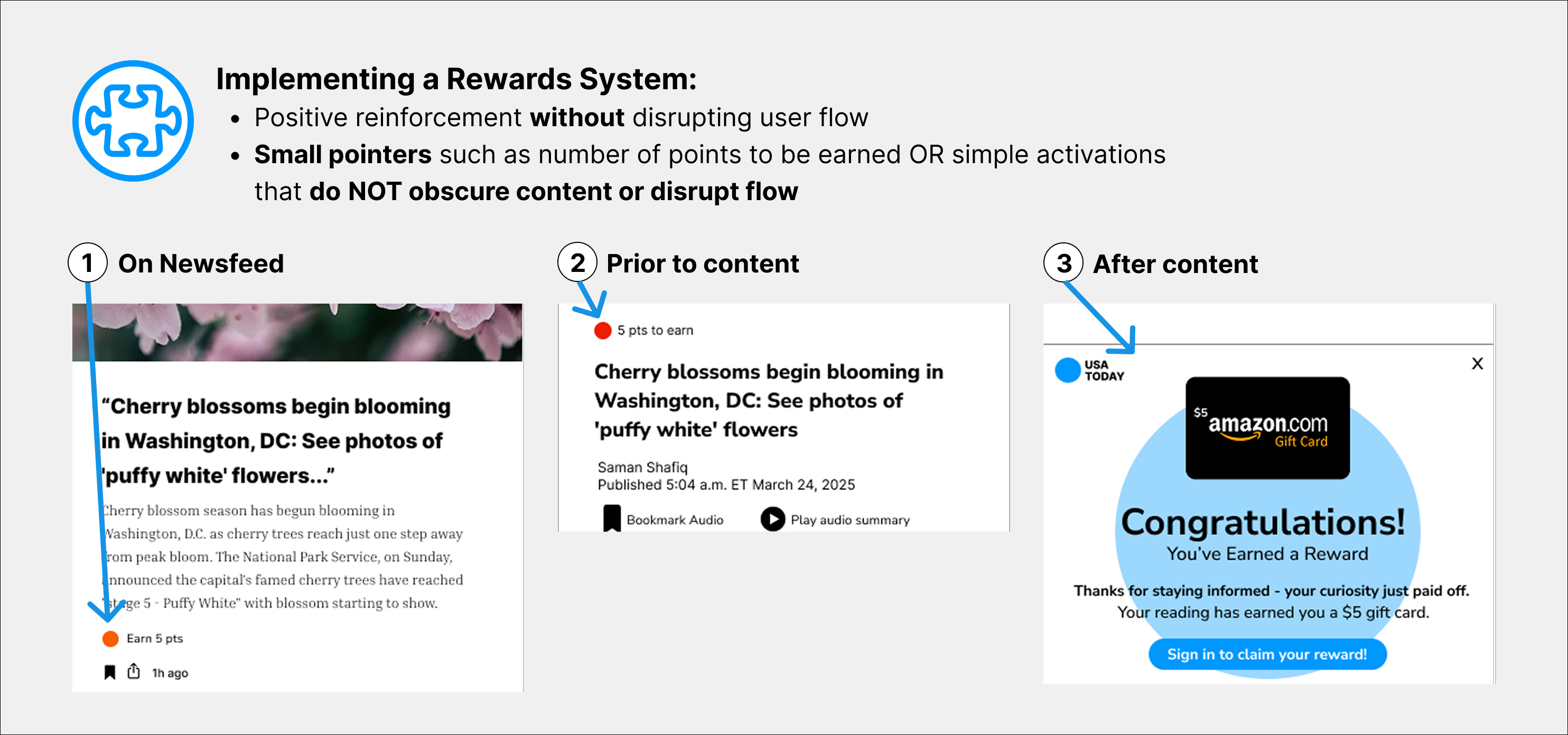
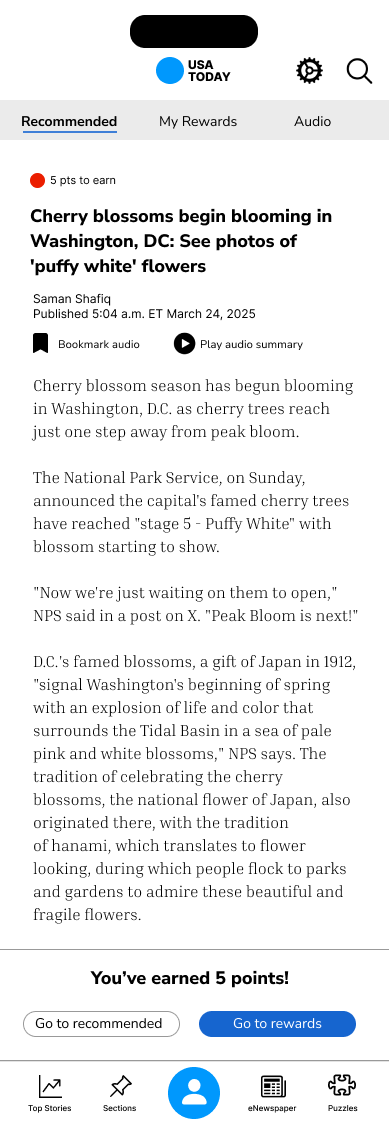
- Points displayed minimally to avoid disruption
- Tiered rewards with local partnerships
- In-article notifications highlight rewards without interrupting reading flow
Proposed User Flow
This user flow encapsulates the feedback cycle between recommended content and user interaction.

Prototype Highlights
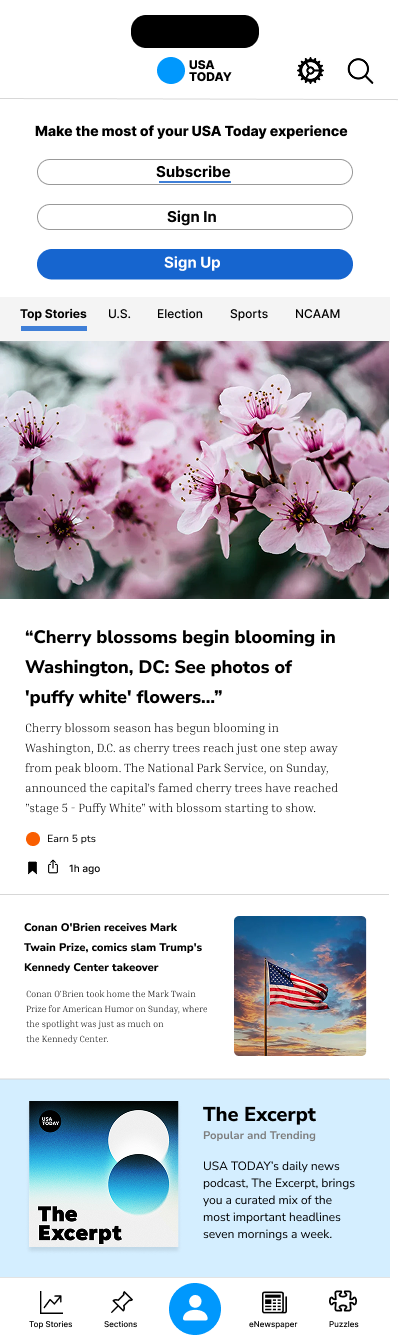
Prototypes focused on the integration of the rewards feedback system in a typical user flow.
Reflection & Next Steps
This project allowed me the opportunity to spearhead a major product decision and initiative. This helped me put product management fundamentals into practice like: Understanding customer journeys, competitive analysis, KPIs, etc.
- Competitive analysis informed strategy and engagement gaps
- Balance gamification to motivate without annoying
- Next: AI personalization, optimized rewards, streamline site navigation
- Accessibility: Keyboard + screen reader friendly interactions